Most people with diabetes are aware of its effects on blood sugar, the heart, and the kidneys. But far fewer know about the significant impact diabetes has on bone and foot health. Poorly managed diabetes can lead to serious orthopedic complications—from stress fractures that happen without injury to foot deformities that threaten the limb itself. At Orthomed Hospital Hisar, we see and treat these complications regularly, and early intervention makes all the difference.
How Diabetes Affects the Bones
There are particularly 2 types of diabetes that have a complex relationship with bone health:
- Insulin plays a role in bone formation, and insulin resistance disrupts this process
- High blood sugar damages the collagen structure that makes bones strong and flexible
- Diabetes increases the risk of osteoporosis and stress fractures
- Neuropathy (nerve damage) means patients often do not feel pain when a fracture occurs—allowing the fracture to go untreated and worsen
- Poor circulation reduces the bone’s ability to heal after an injury or fracture
What Is Diabetic Foot?
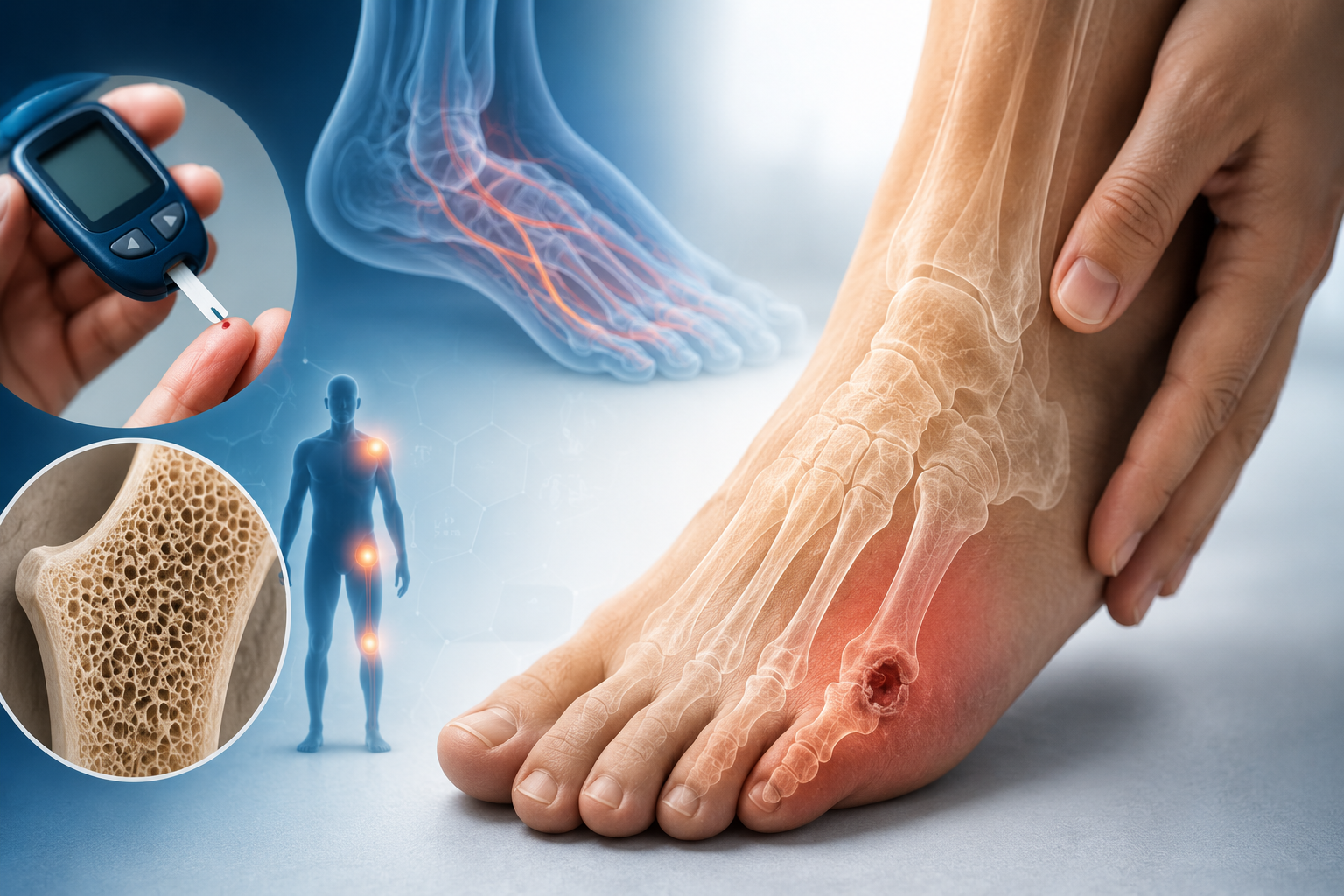
Diabetic foot refers to a range of foot problems that occur as a result of long-term diabetes. They are caused by two main mechanisms:
- Diabetic neuropathy: Nerve damage that reduces sensation in the feet, making it easy to miss small injuries, blisters, or pressure sores
- Peripheral arterial disease: Reduced blood flow to the feet, which impairs healing
Small wounds that would heal quickly in a non-diabetic person can become serious, chronic ulcers in a diabetic patient—and in severe cases, can lead to infection, gangrene, and amputation.
Charcot Foot: A Serious Diabetic Orthopaedic Condition
One of the most serious orthopedic complications of diabetes is Charcot foot (Charcot neuroarthropathy). In this condition, neuropathy causes the bones of the foot to weaken and fracture without the patient feeling pain. The foot gradually collapses and deforms—often into a “rocker bottom” shape.
Charcot foot requires urgent orthopedic attention to prevent further destruction and potential amputation.
Warning Signs Every Diabetic Should Know
Seek orthopedic review at Orthomed Hospital Hisar if you notice the following:
- Redness, swelling, or warmth in the foot
- An open wound or ulcer on the foot that is not healing
- Numbness or loss of sensation in the feet
- Changes in the shape of your foot
- Pain or difficulty walking
- Skin discolouration or darkening of toes
Never ignore a diabetic foot wound — what looks minor can become life-threatening within days.
Prevention and Treatment at Orthomed Hospital Hisar
Prevention is the most powerful tool:
- Keep blood sugar well controlled
- Inspect your feet daily for any cuts, blisters, or colour changes
- Wear proper diabetic footwear
- Never walk barefoot
- Get regular foot check-ups with an orthopaedic specialist
For patients who already have diabetic foot complications, treatment at Orthomed Hospital Hisar includes wound care, offloading footwear, infection management, surgical debridement if needed, and limb salvage for severe cases.
Diabetes and orthopedic health are more closely linked than most people realise. If you have diabetes, do not wait for a problem to become a crisis. Visit Orthomed Hospital Hisar for a diabetic foot assessment and take proactive steps to protect your feet and bones.