

Waking up with a finger that is bent and difficult to straighten, or one that clicks and locks when you move it, is not just inconvenient. Trigger finger is a common hand condition that can make everyday activities such as working, driving, typing, and gripping objects difficult. The good news is that trigger finger is highly treatable. At Orthomed Hospital Hisar, our hand specialists offer treatment options ranging from activity modification and splinting to injections and minor surgical procedures.
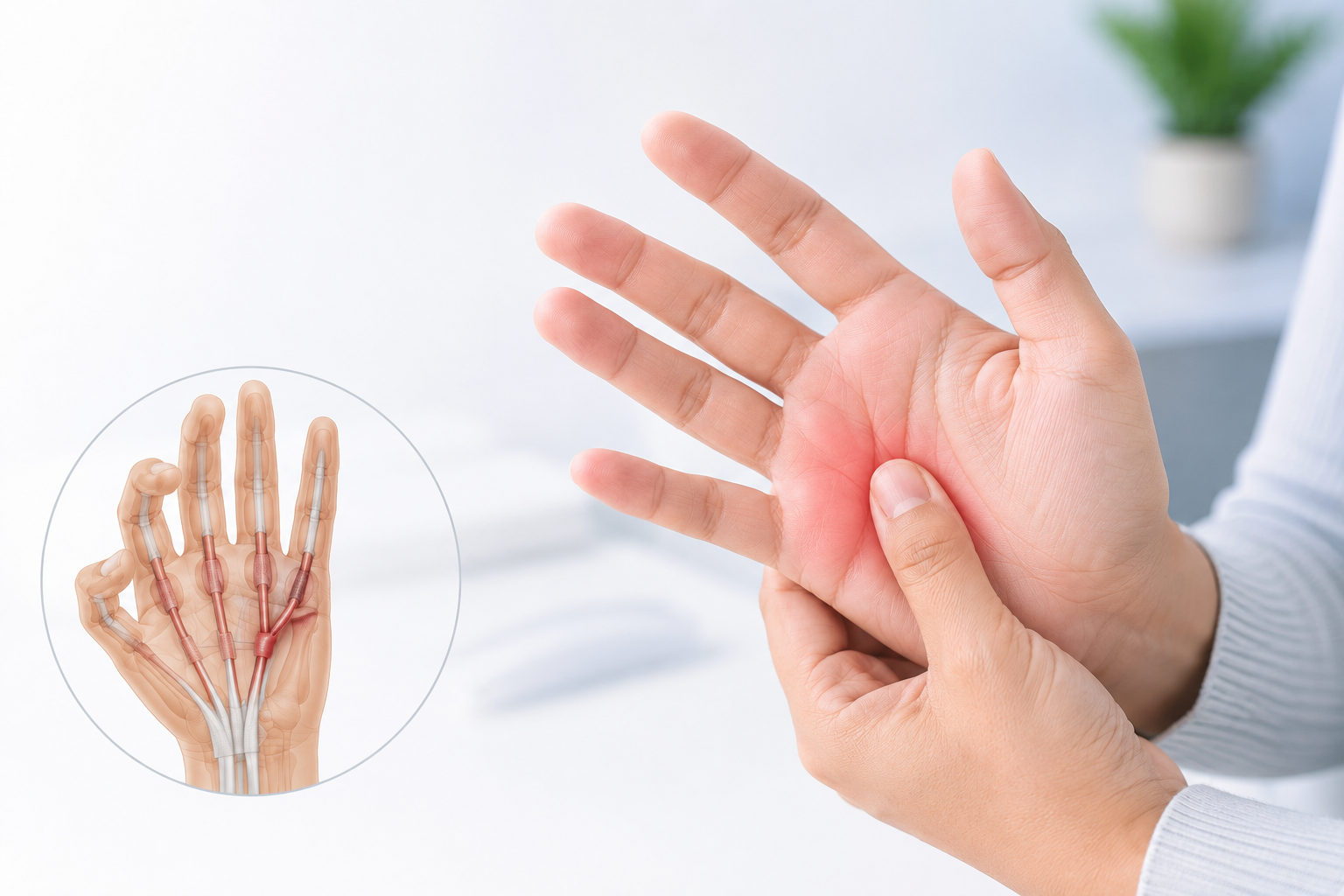
Trigger finger, also known as “stenosing tenosynovitis,” occurs when inflammation narrows the space within the tendon sheath of the affected finger. Normally, the tendon glides smoothly through this sheath. When the sheath becomes inflamed or narrowed, the tendon may become restricted, causing the finger to click, catch, or lock when it is bent.
In mild cases, the finger may click or snap during movement. In moderate cases, it may lock in a bent position and require manual assistance to straighten. In severe cases, the finger can become fixed in a bent position and may not straighten at all.
Any finger can be affected, including the thumb. However, the ring finger and thumb are among the most commonly affected.
The exact cause of trigger finger is not always clear. However, several factors can increase the risk, including:
The symptoms of trigger finger can develop gradually and may become more noticeable over time. Common symptoms include:
If these symptoms persist or interfere with your daily activities, an evaluation by a hand specialist can help determine the appropriate treatment.
Treatment depends on the severity of the condition, how long you have had symptoms, and how much they affect your daily activities.
For mild trigger finger, conservative treatment may be recommended, including
Rest and activity modification: Avoiding repetitive gripping and activities that aggravate the symptoms can help reduce irritation.
Splinting: A splint may be used to keep the affected finger straight, particularly at night, and allow the tendon to rest.
Anti-inflammatory medication: Medicines may be recommended to help manage pain and inflammation when appropriate.
Corticosteroid injection: A corticosteroid injection may help reduce inflammation around the tendon sheath and improve the movement of the affected finger. A single injection can provide lasting relief in many patients, although results can vary from person to person.
Surgical release: When symptoms persist despite non-surgical treatment or the finger remains locked, surgical release may be recommended. This is generally a minor procedure performed under local anesthesia.
During the procedure, a small incision is made near the base of the finger, and the constricted section of the tendon sheath is released. This allows the tendon to move more freely and helps restore normal finger movement.
There is no guaranteed way to prevent trigger finger, but certain measures may help reduce the risk or minimize irritation, particularly if your work involves repetitive hand movements.
Trigger finger may sometimes improve with early conservative care, but symptoms can become more persistent as the condition progresses. Early evaluation can help identify the severity of the problem and determine whether non-surgical treatment may be appropriate.
If your finger is clicking, locking, painful, or becoming difficult to straighten, consult the hand specialists at Orthomed Hospital Hisar for an evaluation and personalized treatment plan.
Quick Links
Copyrights © 2024 Orthomed Hospitals.
Powered by

Quick Links
Services
Orthomed Hospital, Sector 15 AP, Kaimri road, Hisar, Haryana- 125001
Copyrights © 2024 Orthomed Hospitals.
Powered by