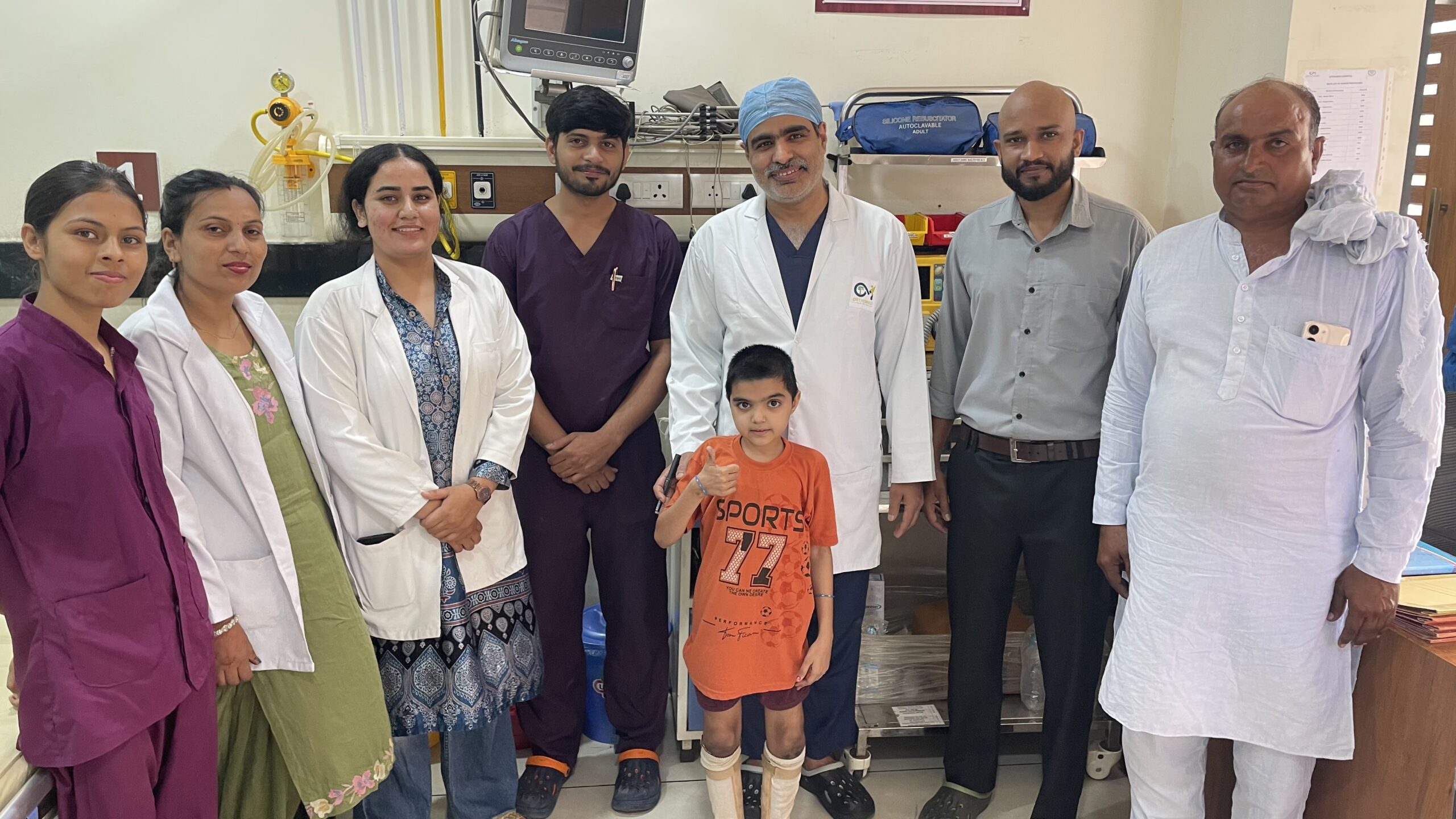

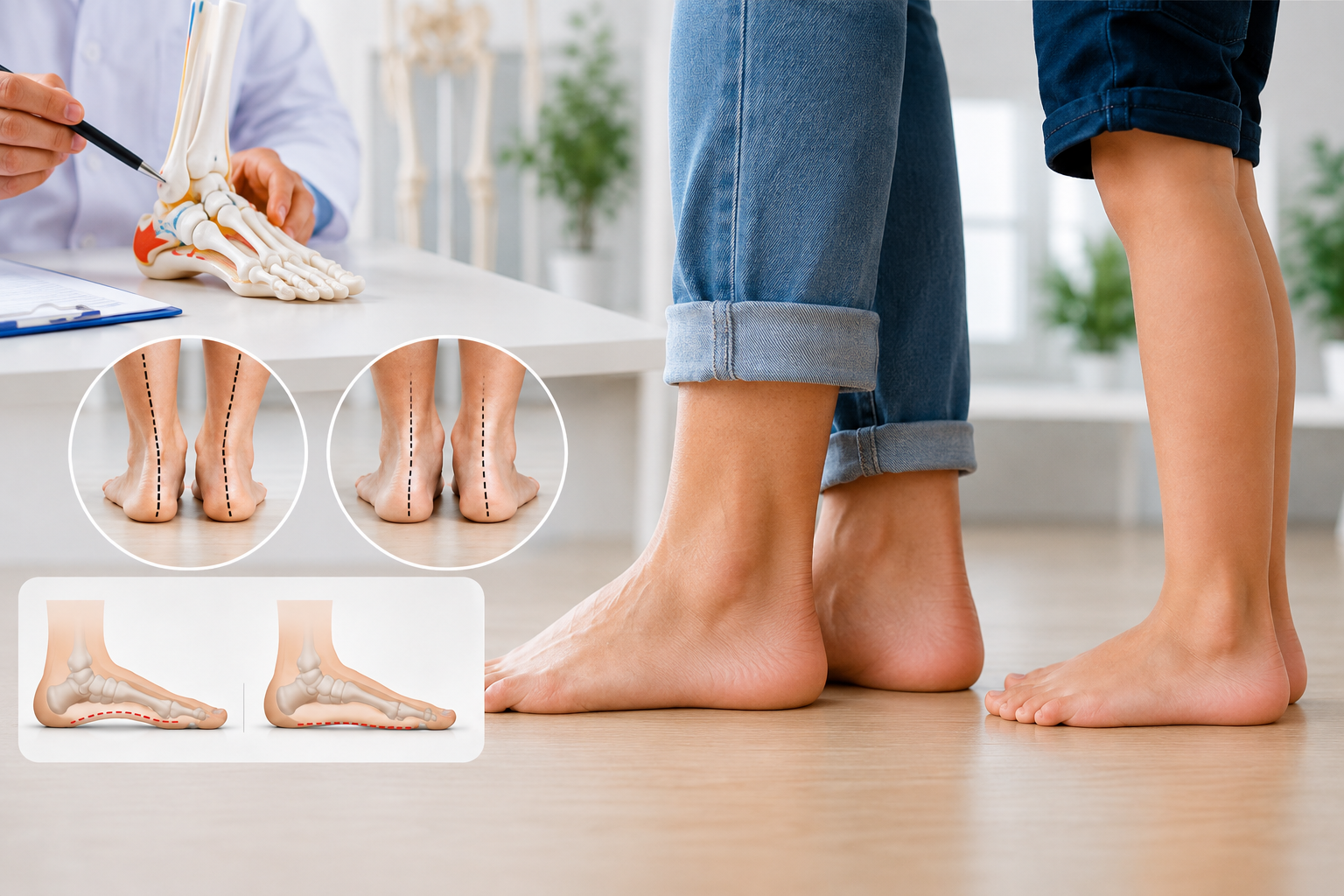
Flat feet, also known as pes planus, are a common foot condition in which the arch of the foot is reduced or absent, causing the entire sole to touch the ground. While many people with flat feet have no symptoms, others may experience foot pain, fatigue, difficulty walking, or problems affecting the knees and ankles. Understanding the causes, symptoms, and treatment options for flat feet can help prevent discomfort and long-term complications.
The arch of the foot is formed by bones, tendons, and ligaments. It acts as a natural shock absorber and helps distribute pressure while walking, running, and standing.
In people with flat feet, the arch is absent or significantly reduced. There are two main types:
Flexible Flat Feet: The arch appears when the foot is lifted off the ground but disappears when standing. This is the most common type, especially in children, and it is often painless.
Rigid Flat Feet: The arch remains absent even when the foot is not bearing weight. This type is more likely to cause pain, stiffness, and other foot problems.
Almost all babies and toddlers naturally have flat feet because the arch develops gradually as the bones, muscles, tendons, and ligaments of the foot become stronger.
By around the age of 6, most children develop a visible arch. In many cases, flat feet in children do not require treatment if:
However, medical evaluation may be recommended if a child experiences foot, ankle, or knee pain, becomes tired easily while walking has difficulty keeping up with other children, or has rigid flat feet.
Flat feet can develop or become more noticeable in adulthood. Several factors can contribute to the development or worsening of flat feet, including:
Not everyone with flat feet experiences symptoms. However, when symptoms occur, they may include:
If these symptoms interfere with your daily activities, a foot and ankle specialist can assess the condition and recommend appropriate treatment.
Treatment for flat feet depends on the person’s age, symptoms, severity of the condition, and underlying cause. Many people can manage their symptoms without surgery.
Custom Orthotic Insoles: Custom-made arch supports can help redistribute pressure, improve foot alignment, and reduce discomfort during walking and standing.
Physiotherapy: Specific exercises can strengthen the posterior tibial tendon, calf muscles, and other muscles that support the foot and ankle.
Supportive Footwear: Shoes with proper arch support, cushioning, and a stable sole can help reduce stress on the feet.
Weight Management: Maintaining a healthy weight can reduce the amount of stress placed on the feet and may help prevent the condition from worsening.
Pain Relief: Anti-inflammatory medicines or other treatments may be recommended by a doctor when pain and inflammation are present.
Surgery may be considered when flat feet are severe, rigid, painful, or do not improve with non-surgical treatment. The type of procedure depends on the underlying problem and may include:
Tendon Reconstruction: The damaged or weakened posterior tibial tendon may be repaired or transferred to improve support for the foot arch.
Osteotomy: The surgeon may cut and realign a bone to improve the position and alignment of the foot.
Joint Fusion: In selected severe or rigid cases, specific foot joints may be fused to create a more stable and functional foot.
Lateral Column Lengthening: This procedure involves repositioning or lengthening part of the outer side of the foot to help restore the height and alignment of the arch.
Flat feet do not always require treatment. However, persistent pain, swelling, stiffness, difficulty walking, or changes in the shape of the foot should not be ignored.
Early evaluation can help identify the underlying cause and determine whether simple measures such as supportive footwear and physiotherapy are enough or whether further treatment is needed.
At Orthomed Hospital Hisar, our foot and pediatric orthopaedic specialists assess flat feet in both children and adults. Based on the severity and cause of the condition, we recommend an appropriate treatment plan focused on improving comfort, mobility, and long-term foot function.
If you or your child has painful flat feet or difficulty walking, book an appointment with the specialists at Orthomed Hospital Hisar for a thorough evaluation.
Quick Links
Copyrights © 2024 Orthomed Hospitals.
Powered by

Quick Links
Services
Orthomed Hospital, Sector 15 AP, Kaimri road, Hisar, Haryana- 125001
Copyrights © 2024 Orthomed Hospitals.
Powered by