
Joint pain, swelling, and stiffness are common symptoms of both gout and arthritis, but these conditions have different causes and require different treatment approaches. If you are looking for gout treatment in Hisar, understanding the difference between gout and other types of arthritis is an important first step toward getting the right diagnosis and care. Confusing the two can delay appropriate treatment and allow symptoms to worsen.
At Orthomed Hospital Hisar, our specialists evaluate patients with joint pain to identify the underlying cause and recommend an appropriate treatment plan. Understanding the differences between gout and arthritis can help you recognize symptoms and seek medical attention at the right time.
Arthritis is a broad term used to describe inflammation or other problems affecting one or more joints. There are more than 100 types of arthritis, but osteoarthritis (OA) and rheumatoid arthritis (RA) are among the most common.
Osteoarthritis is the most common form of arthritis. It develops when the protective cartilage between bones gradually wears down over time.
It commonly affects the:
Osteoarthritis usually develops gradually. Pain may become more noticeable with activity and can be accompanied by stiffness, swelling, and reduced joint movement.
Rheumatoid arthritis is an autoimmune condition in which the body’s immune system mistakenly attacks the lining of the joints.
RA commonly affects joints on both sides of the body, such as both hands, wrists, or knees. Morning stiffness can last for more than an hour and may be associated with swelling, tenderness, and reduced joint function.
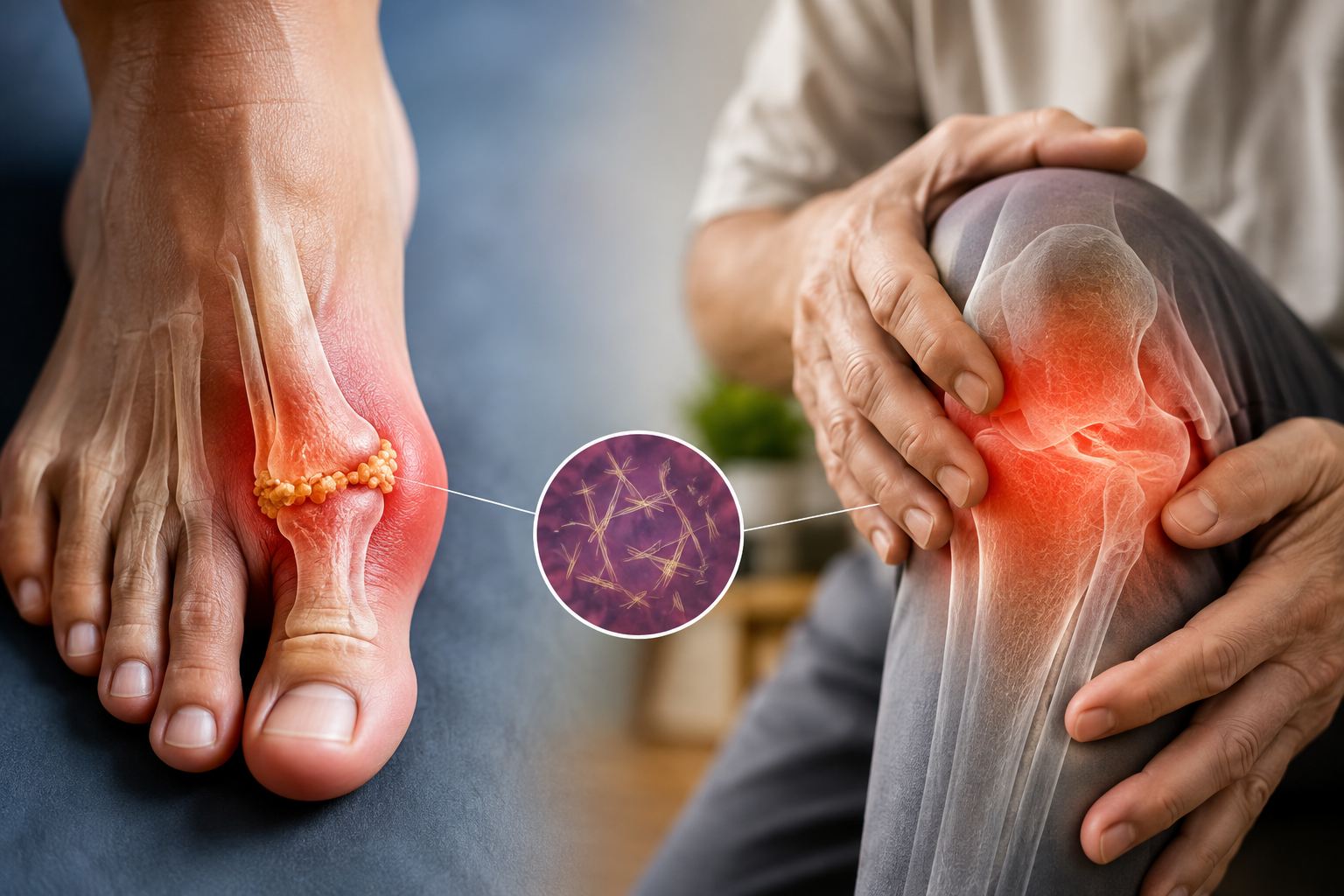
Gout is a type of inflammatory arthritis caused by a buildup of uric acid in the body.
When uric acid levels become too high, urate crystals can form and deposit inside a joint. These crystals can trigger sudden and intense inflammation.
Gout often causes:
The big toe is one of the most commonly affected joints, but gout can also affect the ankles, knees, wrists, elbows, and other joints.
Gout attacks often develop rapidly and may occur at night. The pain can be severe and may make even light pressure on the affected joint uncomfortable.
Although gout is a type of arthritis, its causes and symptoms can be quite different from conditions such as osteoarthritis.
| Feature | Osteoarthritis | Gout |
|---|---|---|
| Onset | Usually develops gradually | Often begins suddenly |
| Pain | Aching or activity-related pain | Sudden, intense pain |
| Common joints | Knees, hips, hands, and spine | Big toe, ankle, knee, and other joints |
| Main cause | Breakdown of joint cartilage | Urate crystal buildup caused by high uric acid |
| Swelling | May develop gradually | Can become severe during an attack |
| Triggers | Activity and repeated joint stress may worsen symptoms | Certain foods, alcohol, dehydration, and some medications may trigger attacks in susceptible people |
Understanding these differences can help patients recognize when they may need professional evaluation for gout vs arthritis.
Uric acid is produced when the body breaks down substances called purines. Normally, the kidneys remove uric acid from the body through urine. When the body produces too much uric acid or does not remove enough of it, uric acid levels can increase.
Factors associated with high uric acid and gout include:
Not everyone with high uric acid develops gout, which is why proper medical evaluation is important.
The goal of gout treatment is to control immediate inflammation, reduce the frequency of future attacks, and manage high uric acid levels when long-term treatment is needed.
Depending on the patient’s condition, treatment may include the following:
It is important not to start, stop, or change gout medication without medical advice. Long-term uric acid-lowering treatment is usually individualized according to the patient’s condition and risk of recurrent attacks.
Treatment for arthritis depends on the type and severity of the condition. For osteoarthritis, treatment may include:
For rheumatoid arthritis and other inflammatory forms of arthritis, treatment may require specialist assessment and medicines that specifically control the underlying inflammation.
Accurate diagnosis is essential because different types of joint pain can have similar symptoms.
At Orthomed Hospital Hisar, doctors may use a combination of:
In some cases, additional testing may be needed to confirm the cause of joint inflammation.
A correct diagnosis helps determine whether the symptoms are related to gout, osteoarthritis, rheumatoid arthritis, or another joint condition.
You should consider consulting a joint pain specialist in Hisar if you experience the following:
Early evaluation can help identify the cause of your symptoms and prevent unnecessary delays in treatment.
Gout and arthritis can both cause pain, swelling, and stiffness, but they are not the same condition. Gout is associated with urate crystal buildup, while osteoarthritis is primarily related to changes and breakdown in the joint over time. Other forms of arthritis, such as rheumatoid arthritis, have different causes and require different treatment approaches.
If you are experiencing persistent or severe joint pain, do not rely only on painkillers or self-treatment. Consult a specialist for an accurate diagnosis and personalized treatment plan.
For gout treatment in Hisar and evaluation of arthritis and other joint conditions, consult the specialists at Orthomed Hospital Hisar.
Quick Links
Copyrights © 2024 Orthomed Hospitals.
Powered by

Quick Links
Services
Orthomed Hospital, Sector 15 AP, Kaimri road, Hisar, Haryana- 125001
Copyrights © 2024 Orthomed Hospitals.
Powered by