Spine Surgery for Scoliosis: Treatment and Recovery
A curved spine is not just a cosmetic concern — in moderate to severe cases, scoliosis can cause pain, restrict breathing, and progressively worsen without treatment. At Orthomed Hospital Hisar, our spine specialists manage scoliosis across all ages and severity levels, using both non-surgical and surgical approaches to restore alignment and improve quality of life.
What Is Scoliosis?
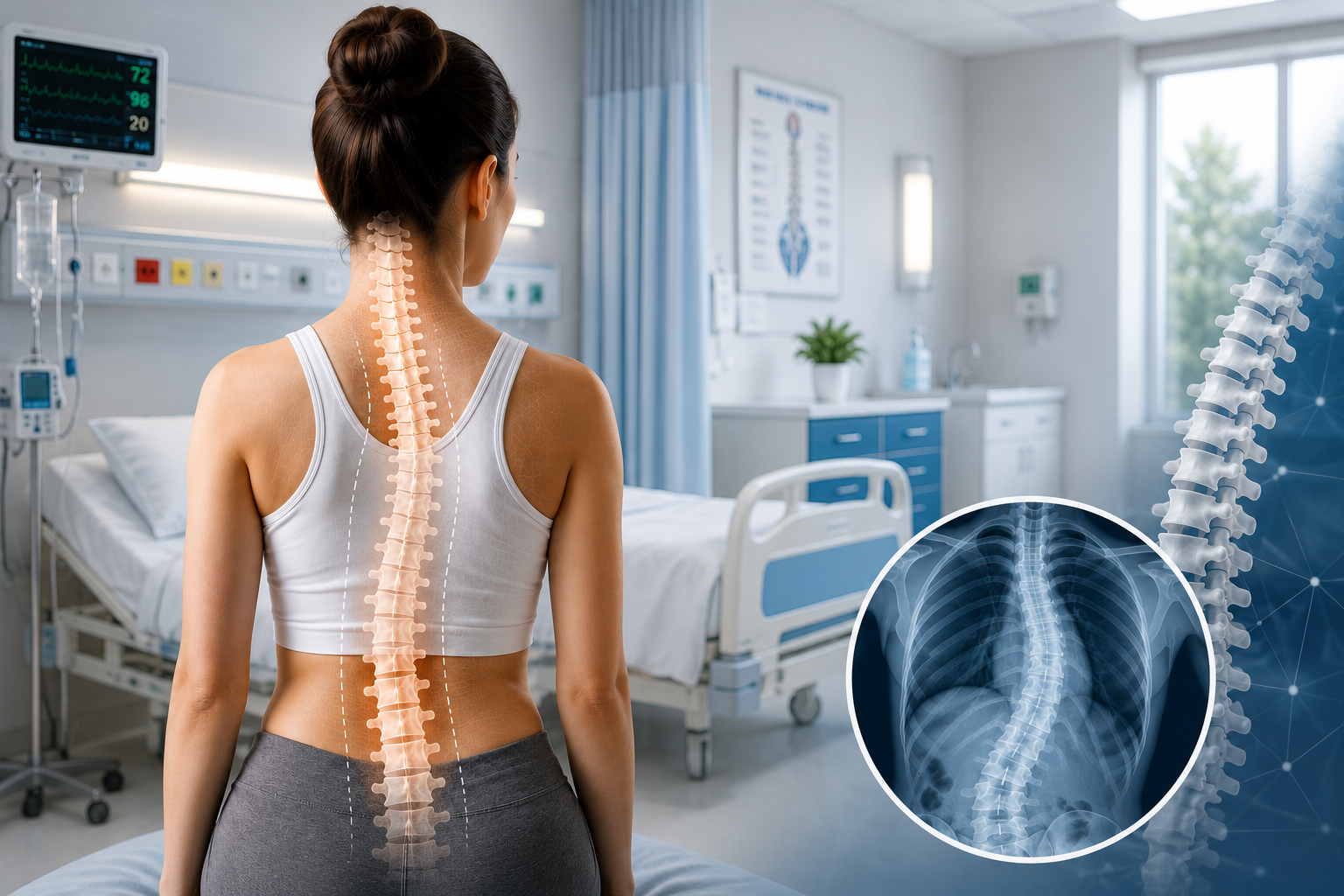
Scoliosis is an abnormal lateral (sideways) curvature of the spine. When viewed from behind, a healthy spine runs straight down the center of the back. In scoliosis, the spine curves into a C or S shape. The condition may also involve rotation of the vertebrae, causing the rib cage to protrude on one side.
Scoliosis is measured by the Cobb angle, the degree of curvature on an X-ray. Curves below 20 degrees are mild, 20 to 40 degrees are moderate, and above 40 degrees are severe.
Types and Causes of Scoliosis
Idiopathic scoliosis (most common): No known cause. It most often develops in adolescent girls during the growth spurt before puberty. Can also occur in infants and younger children.
Congenital scoliosis: Caused by abnormal vertebral development before birth
Neuromuscular scoliosis: Secondary to conditions such as cerebral palsy, muscular dystrophy, or spinal cord injury
Degenerative scoliosis: Develops in adults due to age-related disc and joint degeneration
Secondary scoliosis: Due to leg length discrepancy, tumours, or infection
Non-Surgical Treatment Options
Not all scoliosis requires surgery. For mild curves (under 20 degrees), regular monitoring with periodic X-rays is recommended to watch for progression.
For moderate curves (20 to 40 degrees) in growing children, bracing is the primary non-surgical treatment. A rigid brace worn for 16 to 23 hours a day can prevent curve progression in many cases—it does not straighten the existing curve but stops it from worsening.
Physiotherapy and specific scoliosis exercises (such as the Schroth method) help improve posture, reduce pain, and strengthen the muscles supporting the spine.
When Is Surgery Recommended?
Surgery for scoliosis is typically recommended when:
The curve is greater than 40 to 50 degrees and is still progressing
The curve is causing or threatening to cause breathing problems
Pain is severe and not manageable with conservative treatment
The deformity is causing significant cosmetic distress and impacting the quality of life
Non-surgical measures have failed to control progression
At Orthomed Hospital Hisar, surgery is always a carefully considered decision made after thorough evaluation.
Spinal Fusion Surgery for Scoliosis
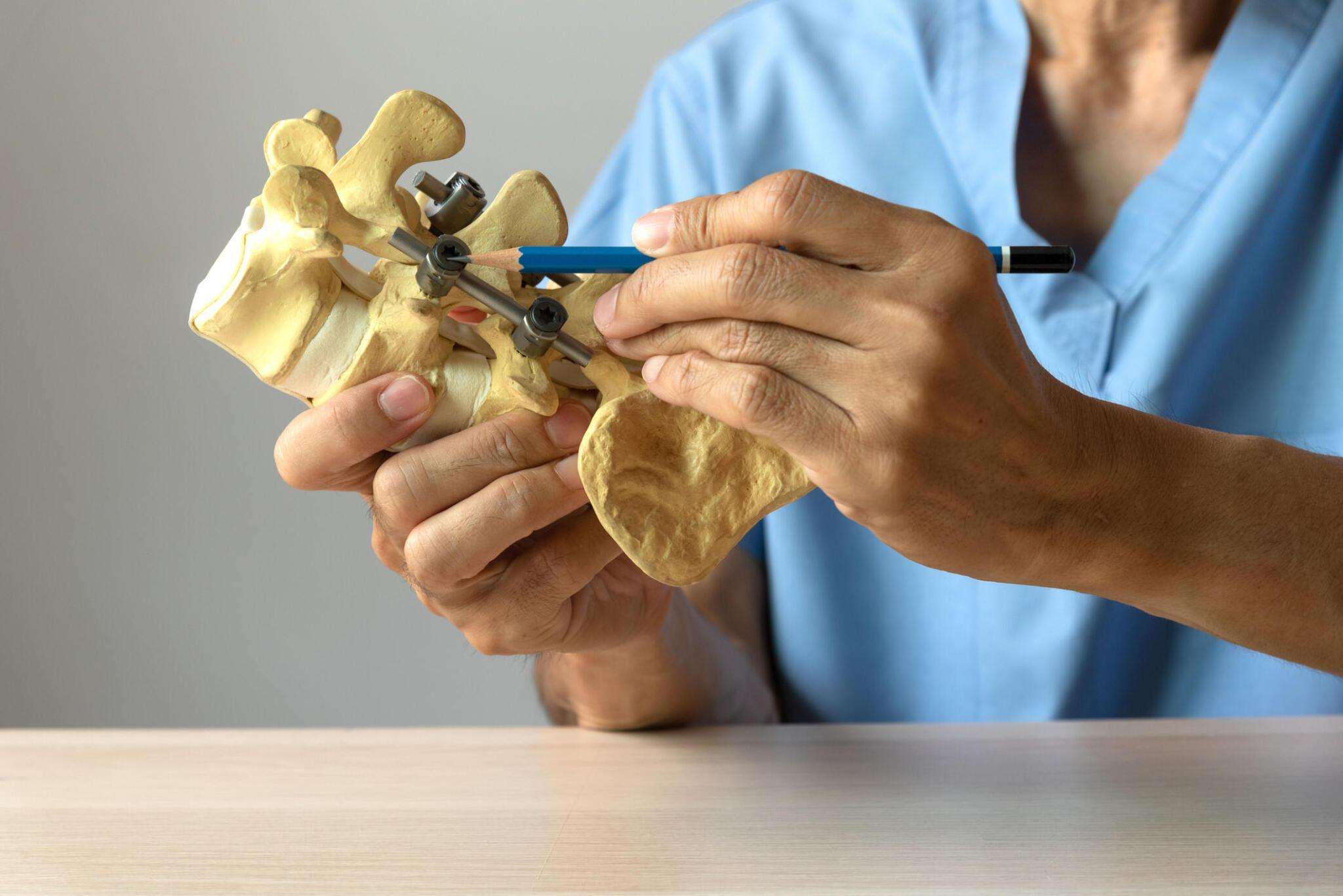
The most common surgical treatment for scoliosis is spinal fusion. The procedure involves:
Correcting the curve using metal rods, screws, and hooks attached to the vertebrae
The bones of the curved segment are then fused together using bone graft material
Over time (usually 3 to 6 months), the vertebrae fuse into a solid bone, permanently holding the spine in its corrected position
Modern spinal fusion at Orthomed Hospital Hisar, achieves significant correction of the curve, typically reducing it by 60 to 70% and preventing further progression. Navigation and imaging technology allow our surgeons to place hardware with exceptional precision.
What Does Recovery Look Like?
Recovery after scoliosis surgery is a gradual but well-supported process:
Hospital stay: 4 to 7 days
Walking: Begins within 1 to 2 days of surgery with support
Return to school or light work: 4 to 6 weeks
Return to non-contact sports: 6 to 12 months
Full bony fusion: 3 to 6 months
Physiotherapy is an essential part of the recovery process. Pain is managed with a structured medication plan and diminishes progressively over weeks.
Scoliosis is a condition that responds best to early detection and expert management. Whether your curve requires monitoring, bracing, or surgery, Orthomed Hospital Hisar has the expertise and technology to deliver the best possible outcome. Book a spine assessment today and take the first step toward a straighter, healthier spine.