
If your doctor has advised an FNAC test, you may be feeling anxious, especially if you have noticed a lump somewhere in your body. Understanding exactly what the test involves takes away much of that fear. At Orthomed Hospital Hisar, FNAC is a routine, quick, and minimally invasive diagnostic procedure that provides crucial information to guide your treatment.
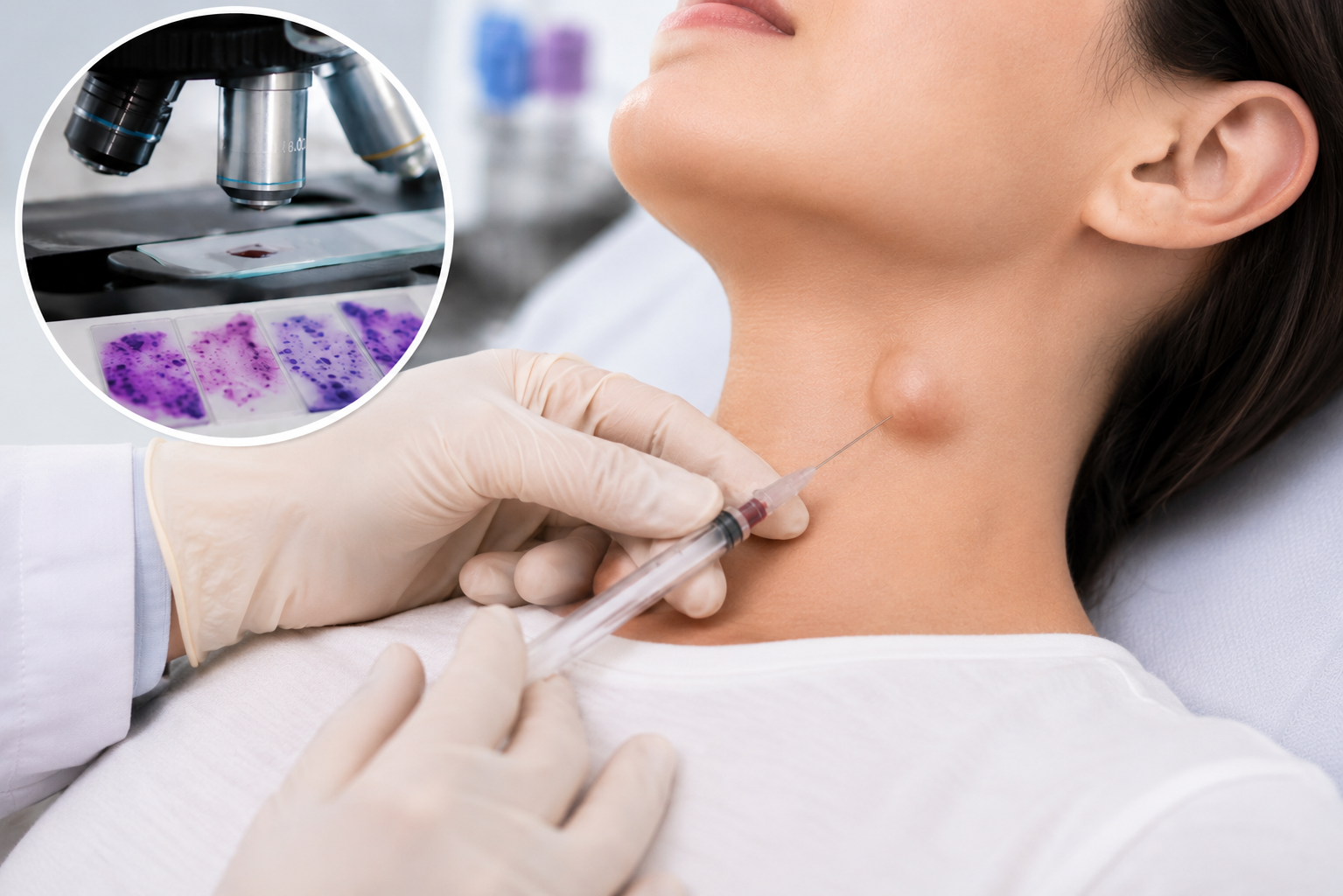
FNAC stands for Fine Needle Aspiration Cytology. It is a diagnostic procedure in which a thin needle is used to extract a small sample of cells from a lump, mass, or swollen lymph node. These cells are then examined under a microscope by a pathologist to determine whether the growth is benign (non-cancerous), malignant (cancerous), or inflammatory.
FNAC is one of the simplest and most reliable first-line tests used to evaluate a lump anywhere in the body—most commonly in the neck, breast, thyroid, armpit, or groin.
FNAC may be recommended by your doctor at Orthomed Hospital Hisar for the following reasons:
FNAC provides a diagnosis without the need for a surgical biopsy in many cases, making it an extremely valuable and cost-effective tool.
FNAC requires very little preparation:
For breast or thyroid FNAC, no special preparation is needed beyond what is listed above.
The procedure at Orthomed Hospital Hisar, is straightforward and takes only 5 to 15 minutes:
For deeper lumps that are not easily felt, ultrasound guidance is used to direct the needle precisely.
Most patients describe FNAC as causing minimal discomfort, comparable to a routine blood draw. The needle used is very thin, and the procedure is completed quickly. You may feel mild soreness or bruising at the site for a day or two after the test, but this resolves on its own.
FNAC results are typically available within 24 to 72 hours at Orthomed Hospital Hisar. Results are categorized as
FNAC results should always be interpreted in the context of your clinical history, physical examination, and imaging findings.
An FNAC test is a quick, safe, and minimally invasive way to get critical diagnostic information about a lump or swelling. If your doctor has recommended one, there is no reason to delay. At Orthomed Hospital Hisar, our experienced team ensures the procedure is as comfortable as possible and that your results are communicated clearly. Book your appointment today.
Quick Links
Copyrights © 2024 Orthomed Hospitals.
Powered by

Quick Links
Services
Orthomed Hospital, Sector 15 AP, Kaimri road, Hisar, Haryana- 125001
Copyrights © 2024 Orthomed Hospitals.
Powered by