10 Early Signs of Knee Arthritis You Shouldn't Ignore
Knee arthritis does not arrive overnight. It creeps in gradually, often dismissed as normal tiredness or the effects of ageing. But by the time many patients visit Orthomed Hospital Hisar, the damage is already significant.
The good news? Arthritis is far easier to manage when caught early.
1. Morning Stiffness That Lasts More Than 30 Minutes
If your knees feel stiff and difficult to move when you wake up, and this stiffness persists for more than 30 minutes, it is one of the earliest indicators of arthritis. Healthy joints loosen up quickly; arthritic joints take much longer.
2. A Dull Ache After Activity
A persistent dull ache in the knee after walking, climbing stairs, or standing for long periods is an early red flag. Unlike muscle soreness that resolves in 24 to 48 hours, arthritis related aching tends to linger or return consistently after activity.
3. Swelling Around the Knee Joint
Mild swelling or puffiness around the knee, even without a specific injury, signals inflammation inside the joint. This is the body’s response to cartilage breakdown. Early swelling is often dismissed as minor, but it should prompt a medical evaluation.
4. A Clicking, Grinding, or Crunching Sound
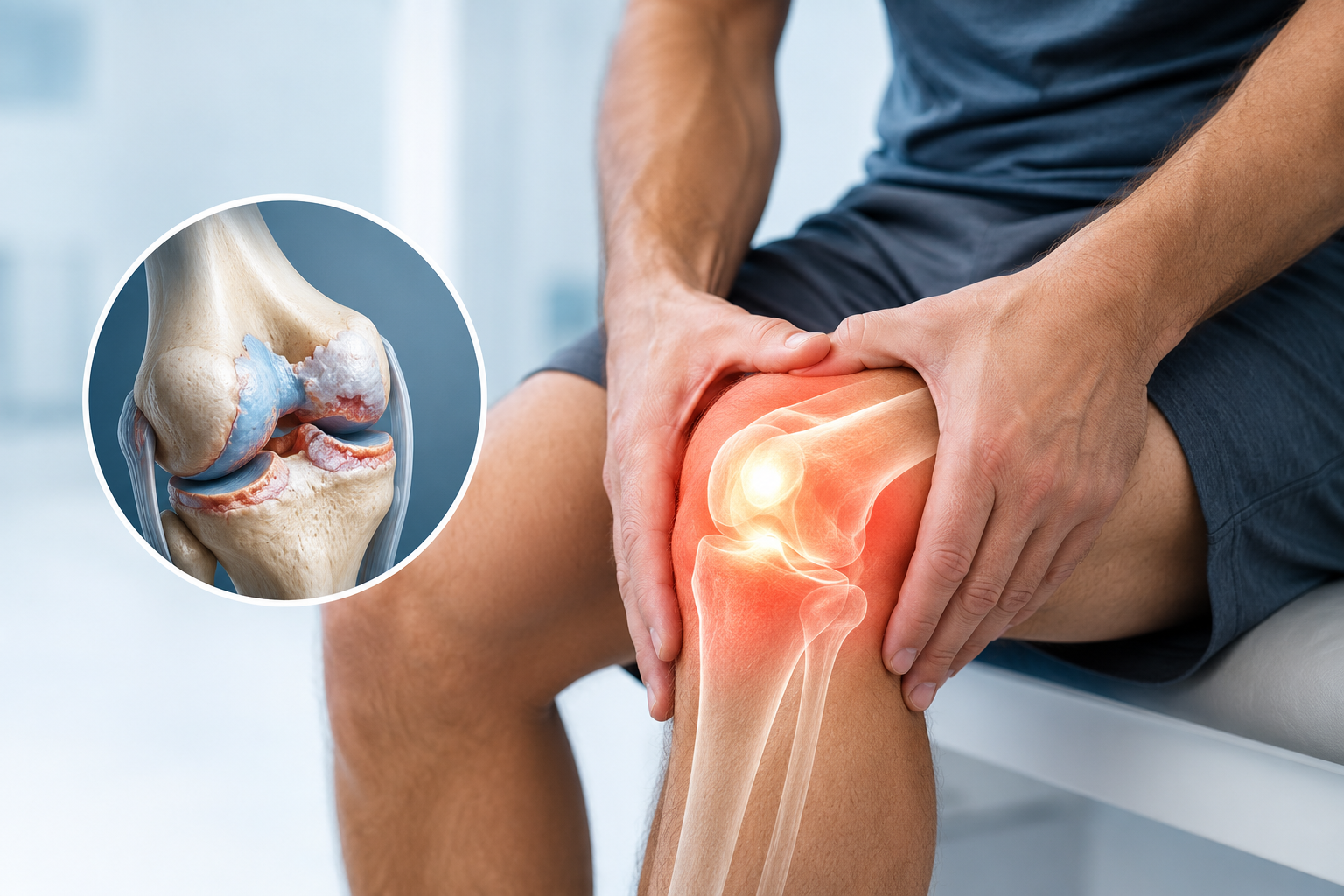
Known medically as crepitus, this grating sensation or sound when bending and straightening the knee occurs when the cartilage surfaces wear down and bones begin rubbing against each other. It is one of the most characteristic early signs of knee arthritis.
5. Difficulty Fully Straightening or Bending the Knee
If you notice that your knee no longer straightens or bends completely, or that certain movements feel restricted, this loss of range of motion is a sign of joint deterioration that deserves prompt attention.
6. Increased Pain in Cold or Humid Weather
Many arthritis patients report that their knee pain worsens during cold weather or before rain. This is because changes in barometric pressure affect the pressure inside the joint. If your knees reliably ache when the weather changes, arthritis may already be at play.
7. Tenderness When You Press on the Knee
Pressing gently on the sides of the knee or along the joint line and feeling tenderness or pain is an early clinical sign that the joint lining is inflamed. This is something your orthopaedic specialist at Orthomed Hospital Hisar will assess during a physical examination.
8. Weakness or Instability in the Knee
Early arthritis causes the muscles around the knee to weaken due to pain and reduced use. You may notice the knee occasionally feels like it will give way, buckle, or cannot be fully trusted, particularly when descending stairs or walking on uneven ground.
9. Gradual Changes in Leg Alignment
Over time, progressive cartilage loss on one side of the knee causes the leg to gradually bow inward or outward. This subtle change in alignment is often visible in photographs taken over several years and is a sign that arthritis is advancing.
10. Pain That Wakes You at Night
When knee pain becomes severe enough to disturb sleep, especially when lying on the affected side, it indicates significant inflammation or joint damage. Night pain is a sign that conservative management alone may no longer be sufficient, and a specialist review is needed urgently.
What Should You Do Next?
If you recognise two or more of these signs in yourself or a family member, do not wait for the pain to become unbearable. Early diagnosis at Orthomed Hospital Hisar includes a clinical examination, X rays, and, where needed, an MRI scan to assess the extent of cartilage damage.
Early stage knee arthritis can be managed very effectively with physiotherapy, lifestyle changes, anti inflammatory treatment, and joint injections, helping avoid or delay the need for surgery.
Knee arthritis is not just a condition of old age, and it is not something you simply have to live with. The earlier you seek help, the more treatment options you have. Visit Orthomed Hospital Hisar, today for a comprehensive knee assessment and take back control of your mobility.