Living with a bone or limb deformity can be physically painful and emotionally challenging. Whether it is a child born with a foot deformity or an adult dealing with bowed legs from untreated arthritis, deformity correction surgery can transform lives. At Orthomed Hospital Hisar, our orthopaedic team specialises in restoring normal alignment and function to patients of all ages.
What Is Deformity Correction Surgery?
Deformity correction surgery refers to a range of orthopaedic procedures designed to correct abnormal bone alignment, shape, or length. The goal is to restore the natural mechanics of the limb — improving posture, reducing pain, and enabling normal movement.
Deformities can affect any bone in the body, but are most common in the legs, feet, and spine.
Common Conditions Treated
At Orthomed Hospital Hisar, our deformity correction programme covers:
- Bow legs (genu varum) and knock knees (genu valgum)
- Club foot and other congenital foot deformities
- Angular deformities of the forearm or tibia
- Limb length discrepancy (one leg shorter than the other)
- Post-fracture malunion (a bone that healed in an incorrect position)
- Scoliosis and other spinal deformities
- Deformities resulting from rickets, infection, or tumour
Surgical Techniques Used
Depending on the type and severity of the deformity, treatment may involve:
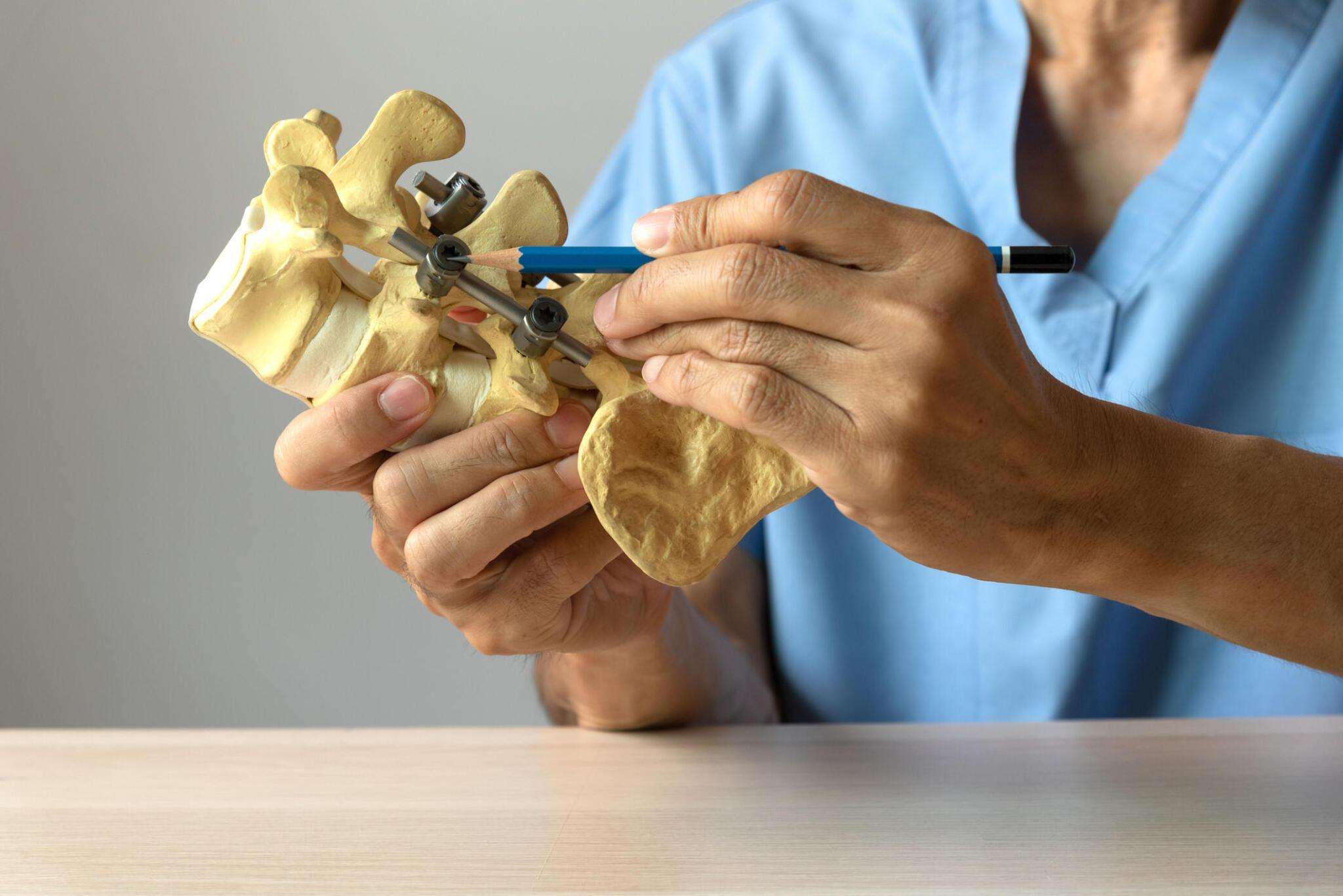
- Osteotomy: Cutting and realigning the bone in the correct position
- Ilizarov or Taylor Spatial Frame: An external fixator that gradually corrects deformity and lengthens bone over time
- Internal fixation: Using plates, screws, or rods to hold the corrected bone in position
- Soft tissue procedures: Releasing tight tendons and muscles that contribute to deformity
Our surgeons use detailed pre-operative planning and advanced imaging to achieve precise correction.
Who Should Consider Deformity Correction?
Deformity correction surgery is recommended when:
- The deformity causes significant pain or functional limitation
- Conservative treatments such as physiotherapy or bracing have not provided adequate relief
- The deformity is progressive and likely to worsen without intervention
- A child’s growth is being affected by an uncorrected deformity
Early intervention in children often yields the best outcomes, as the growing skeleton is more responsive to correction.
Recovery and Results
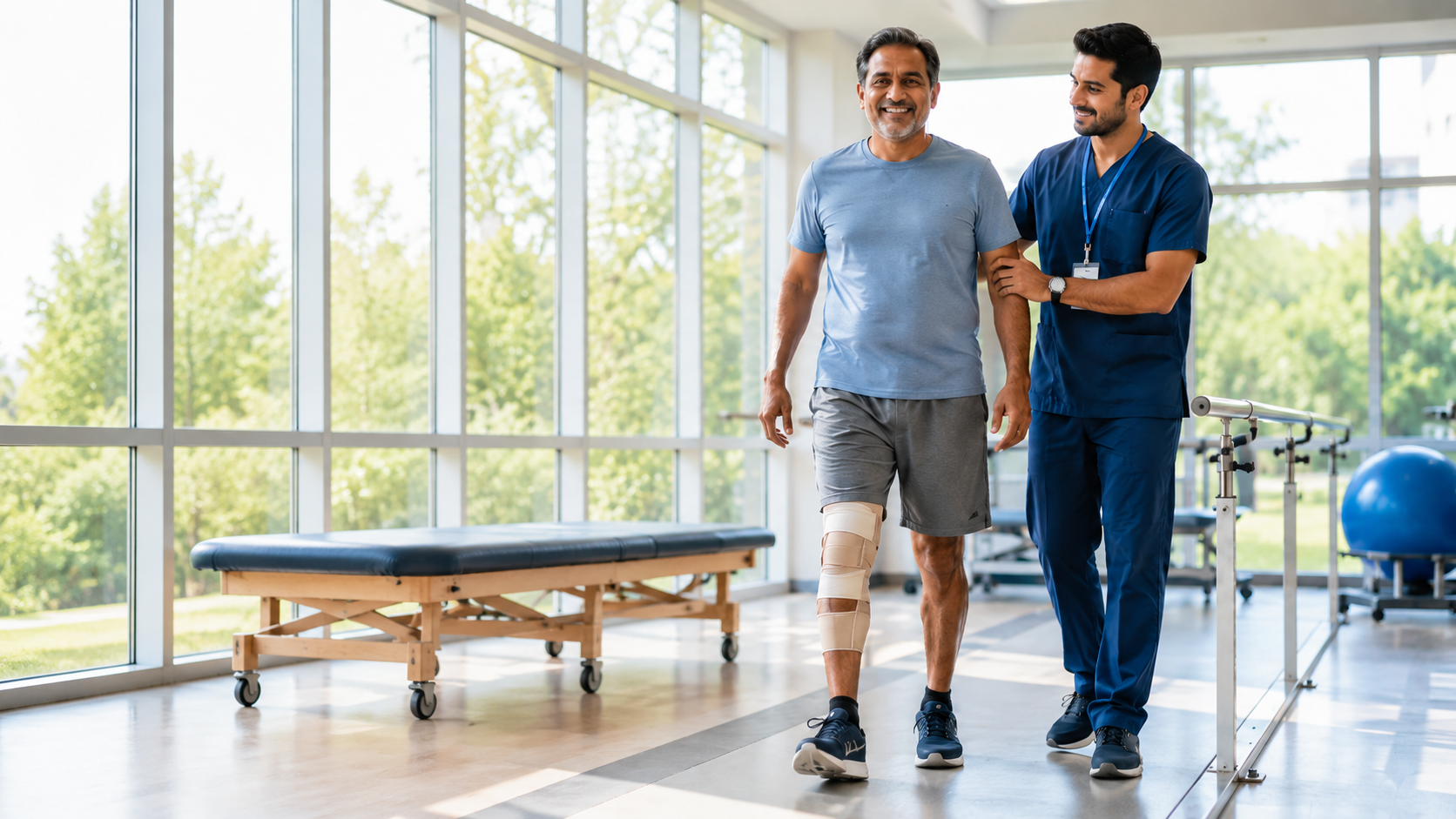
Recovery time varies significantly depending on the procedure. Simple osteotomies may require 6 to 8 weeks in a cast, while complex deformity corrections using external fixators may involve a gradual correction process over several months. Physiotherapy plays a critical role in restoring strength and mobility.
The results can be life-changing — patients who struggled to walk, stand, or perform basic activities regain independence, confidence, and quality of life.
No one should have to live with the pain and limitations of a bone deformity. At Orthomed Hospital Hisar, our experienced orthopaedic surgeons are committed to delivering precise, compassionate deformity correction care. Contact us today to book your consultation.