When people think about orthopaedic treatment, the surgery naturally gets most of the attention. But ask any experienced orthopaedic surgeon at Orthomed Hospital, Hisar and they will tell you, physiotherapy after surgery is just as critical as the procedure itself. Without proper rehabilitation, even the most technically perfect surgery may not deliver the results a patient hopes for.
Why Physiotherapy Matters After Surgery
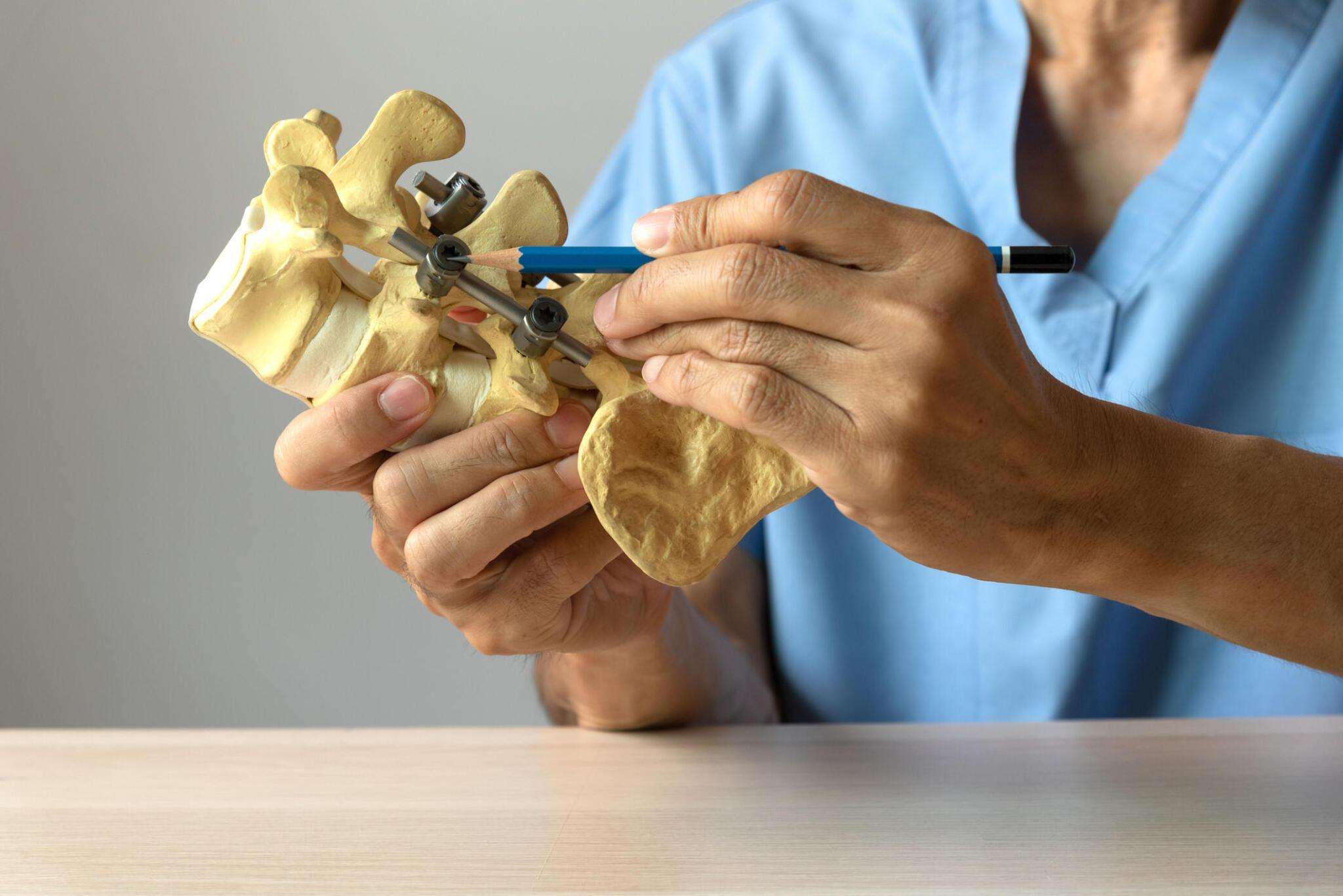
After any orthopaedic surgery — whether it is a joint replacement, ACL repair, spine surgery, or fracture fixation — the body needs to heal, adapt, and relearn how to move properly. Surgery corrects the structural problem, but it is physiotherapy that rebuilds the strength, flexibility, and coordination needed for normal function.
Without physiotherapy:
- Muscles weaken rapidly from disuse
- Joints stiffen and the range of motion is lost
- Scar tissue can build up, restricting movement
- Recovery takes significantly longer
- The risk of re-injury increases
What Happens in Physiotherapy?
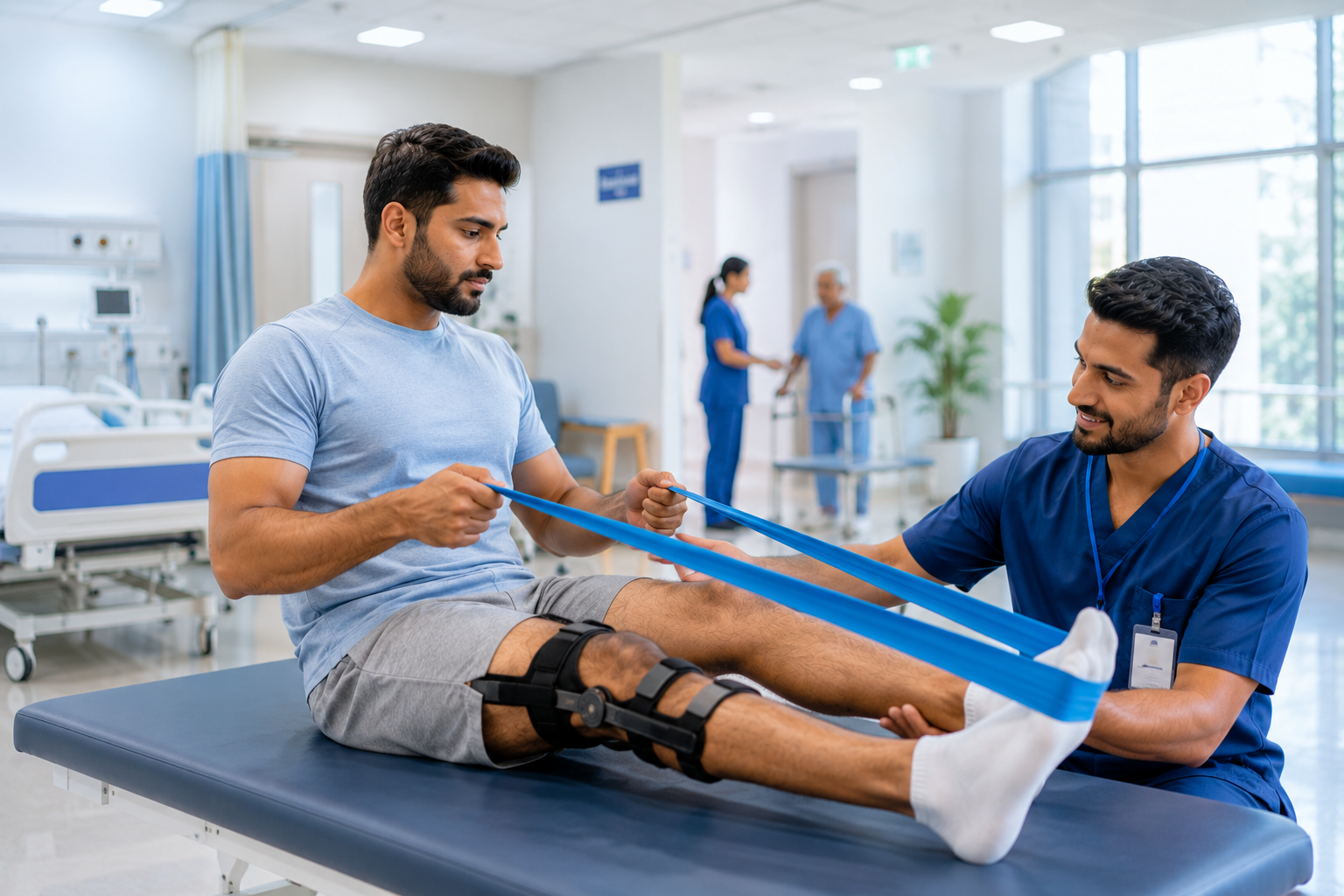
At Orthomed Hospital Hisar, our physiotherapy programme is tailored individually to each patient’s surgery, age, fitness level, and recovery goals. A typical rehabilitation plan includes:
- Early mobilisation: Getting the patient moving safely within hours or days of surgery to prevent blood clots and stiffness
- Range of motion exercises: Gradually restoring full movement to the affected joint
- Strengthening exercises: Rebuilding the muscles around the joint to provide stability and support
- Balance and proprioception training: Retraining the body’s sense of position and movement
- Functional training: Practising everyday activities like walking, climbing stairs, and getting in and out of a chair
- Return-to-sport training: For athletes, sport-specific exercises to ensure safe return to competitive activity
How Soon After Surgery Does Physiotherapy Start?
The timing depends on the surgery. For joint replacements, physiotherapy typically begins the day after surgery — or even the same day. For more complex procedures, it may start after a few days. The key principle is: the sooner rehabilitation begins (safely), the better the outcome.
Early physiotherapy has been proven to reduce hospital stay, lower complication rates, and improve long-term function significantly.
The Role of Home Exercises
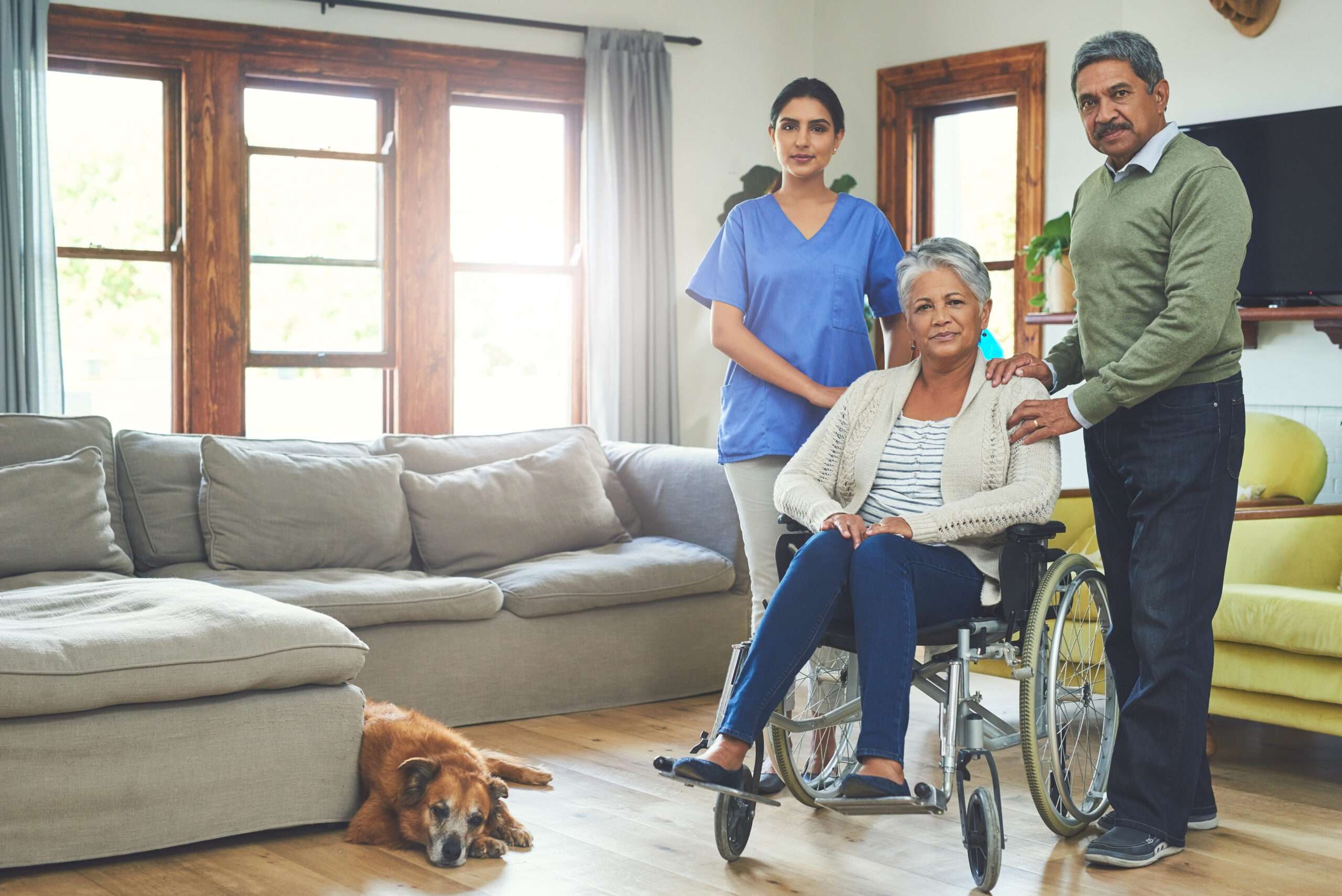
In-hospital physiotherapy is just the beginning. At Orthomed Hospital Hisar, our physiotherapists provide each patient with a detailed home exercise programme to continue their recovery. Consistency with home exercises — even simple ones — dramatically accelerates healing and helps maintain the progress made in formal sessions.
How Long Does Rehabilitation Take?
Recovery timelines vary depending on the surgery:
- Knee replacement: 6 to 12 weeks for basic activities, 3 to 6 months for full recovery
- Hip replacement: 4 to 8 weeks for daily activities, 3 to 4 months for full recovery
- ACL reconstruction: 6 to 9 months before return to sport
- Spine surgery: 4 to 12 weeks, depending on the procedure
Patients who commit to their physiotherapy programme consistently achieve the best outcomes and the fastest return to normal life.
Think of surgery and physiotherapy as two halves of the same treatment. One without the other delivers incomplete results. At Orthomed Hospital Hisar, our integrated approach — combining surgical excellence with dedicated rehabilitation — ensures that every patient achieves the best possible recovery. Start your journey to full recovery today.